What Is Reiki?
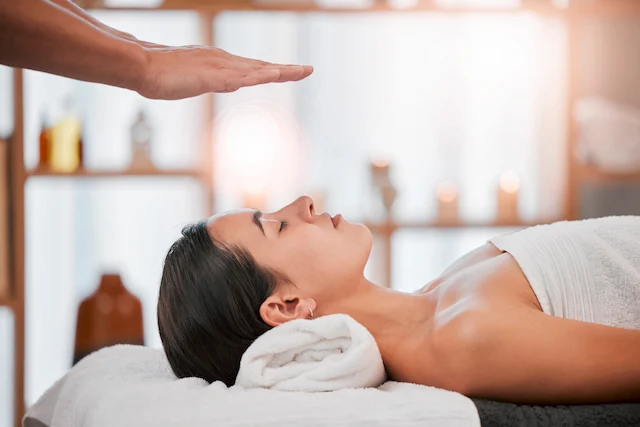
Reiki is not massage. It's a form of energy therapy that works through light touch or hovering hands to support deep relaxation and the body's natural capacity to restore itself.
Reiki doesn’t fit neatly into most people’s idea of what a spa treatment is. There’s no deep pressure, no movement of muscle tissue, no exfoliation. A session can look, from the outside, almost like nothing is happening. And yet clients regularly describe it as one of the most profound experiences they’ve had on a treatment table.
Understanding what Reiki is — and what it isn’t — helps set the right expectations before you book.
Where It Comes From
Reiki is a Japanese healing modality developed in the early 20th century by Mikao Usui. The word combines rei (universal or spiritual) and ki (life energy) — the same concept that appears in traditional Chinese medicine as qi and in Ayurveda as prana. The underlying idea is that the body has an energy system, and that disruptions to that system manifest as physical tension, emotional stress, and reduced well-being.
A Reiki practitioner is trained to sense and work with this energy using light touch or hands held just above the body’s surface.
What Happens During a Session
You lie fully clothed on a treatment table in a quiet, warm room. Your practitioner will place their hands gently on or just above a series of positions — head, neck, chest, abdomen, and limbs — pausing at each location to work with the energy of that area.
There’s no pressure, no movement, and nothing required of you except to relax and breathe. Many clients notice warmth, tingling, or a deep sense of heaviness in their limbs — the body settling into genuine rest. Some fall asleep. Some experience emotional release. Some feel simply still in a way they rarely access in daily life.
Each session is 60 minutes.
What Reiki Is Good For
Reiki works primarily at the level of the nervous system and emotional body. It’s particularly well-suited for:
Stress and anxiety. The parasympathetic response Reiki activates is among the deepest available through bodywork. For people who find it difficult to fully relax — who stay in their heads even during massage — Reiki often reaches a different layer.
Emotional exhaustion. Periods of grief, burnout, or sustained stress can leave a person feeling depleted in ways that physical massage doesn’t fully address. Reiki works at a different level of the system.
Chronic pain and tension. While Reiki doesn’t manipulate tissue directly, many people with chronic pain conditions report meaningful relief following regular sessions — likely mediated through the nervous system’s role in pain amplification.
General restoration. You don’t need a specific reason to benefit from Reiki. Many people incorporate it into their wellness routine simply because of how it makes them feel: quieter, lighter, more themselves.
A Note on Openness
Reiki doesn’t require you to hold any particular belief about energy or spirituality to experience its effects. The physiological component — the activation of the parasympathetic nervous system through sustained stillness and gentle touch — is real regardless of your framework for understanding it.
Arriving with curiosity rather than skepticism or expectation tends to produce the best experience. If you have questions before booking, we’re happy to talk through what a session involves.