What Is Cupping Massage?
Cupping works differently than any other massage technique — instead of pressing into muscle, it pulls. Here's what that means for your body, and what to expect from a session.
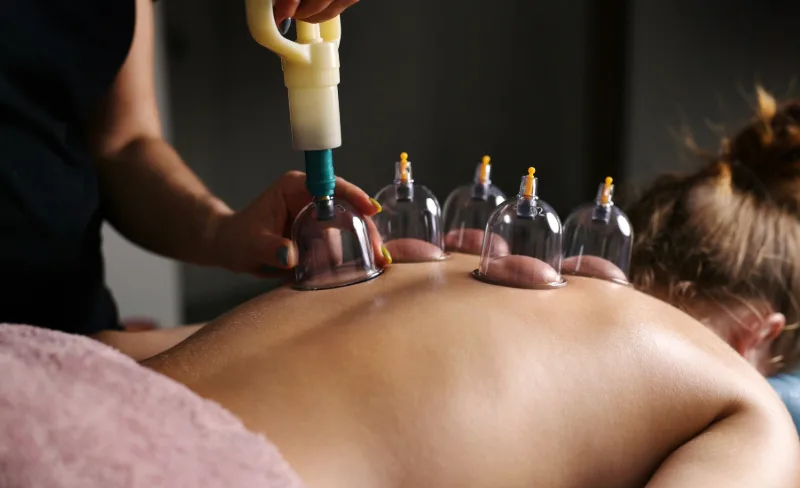
Most massage techniques work through compression — a therapist presses into muscle tissue to release tension and encourage circulation. Cupping works the opposite way. Suction cups placed on the skin create negative pressure, lifting and separating the layers of tissue beneath rather than pushing down on them.
The result is a different kind of release — one that many clients describe as reaching places that hands alone can’t.
How It Works
Silicone or glass cups are placed on the skin and left in position or moved slowly across the surface. The suction draws skin, fascia, and the upper layers of muscle gently upward. This lifts and decompresses tissue that has become compressed and matted over time, increases blood flow to the area, and creates space in layers of connective tissue that have grown restricted.
The technique has been used in traditional medicine across cultures for thousands of years. Modern practitioners combine it with standard massage work — cupping addresses fascial restriction while hands-on work addresses muscle tension — making for a more comprehensive session.
What It Treats
Cupping is particularly effective for:
Chronic tightness and deep tension. Areas that feel perpetually knotted — upper traps, lower back, IT bands — often respond well to the decompression cupping provides. It can reach restrictions that sustained hand pressure doesn’t fully resolve.
Circulation and stagnation. The suction dramatically increases blood flow to the treated area, bringing fresh oxygen and helping clear metabolic byproducts from fatigued muscle tissue.
Athletic recovery. Many athletes use cupping to accelerate recovery between training sessions, reduce post-exercise soreness, and address overuse areas before they develop into injury.
General stress relief. Even without specific tension patterns, the sensory experience of cupping activates the parasympathetic nervous system in a way that feels distinct from standard massage.
About the Marks
It’s worth addressing directly: cupping often leaves circular marks on the skin that can appear purple, red, or pink and last a few days. These are not bruises. Bruising is caused by impact — broken capillaries from blunt force. The marks from cupping are caused by the suction drawing stagnant blood and fluid from deeper tissue toward the surface. They are not painful, and they fade on their own within a few days.
The darker the mark, the more stagnation was present in that area. Over repeated sessions, as circulation improves, the marks typically become lighter.
What to Expect
Sessions are available in 30, 60, and 90 minutes. Cupping may be used throughout the session or in combination with traditional massage technique, depending on your goals and what your therapist finds. You may feel warmth, a mild pulling sensation, and significant relaxation during the work.
Drink plenty of water afterward and avoid intense heat (hot tubs, saunas) for 24 hours. The skin can be tender in the treated areas — that fades quickly.
If you have questions about whether cupping is appropriate for your situation, we’re glad to talk it through before you book.