What Is Buccal Massage?
Buccal massage is an intraoral technique that works the muscles of the jaw and face from the inside — releasing deep tension that no external massage can fully reach.
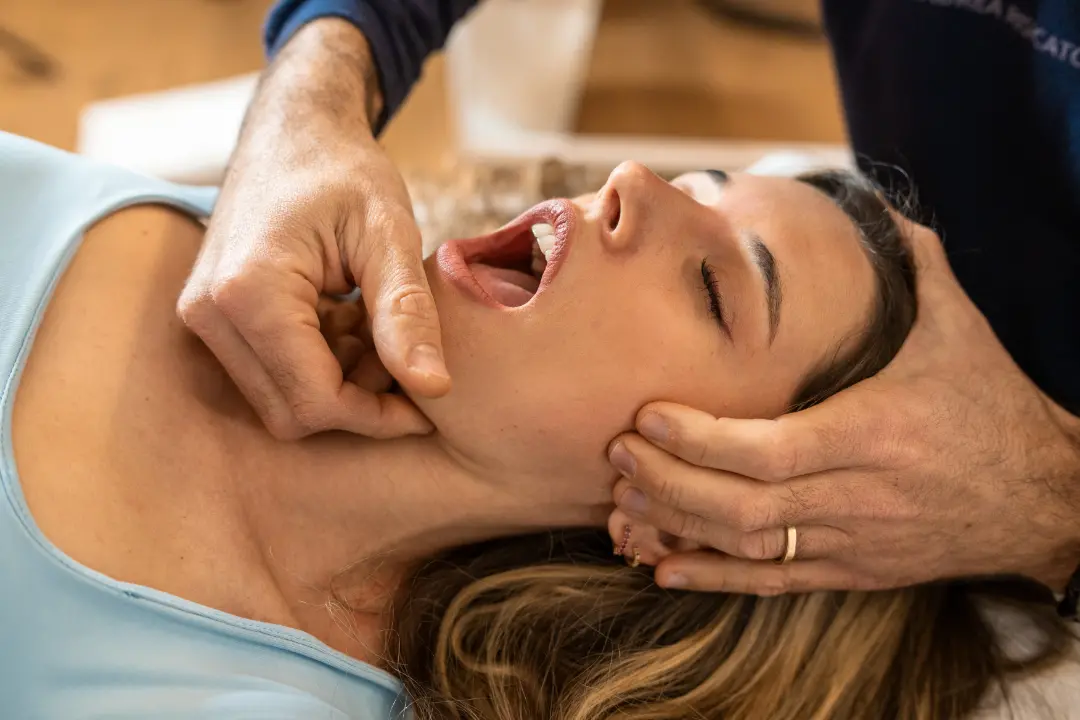
Most facial massage works from the outside — the therapist moves along the surface of the skin, addressing the muscles of the forehead, cheeks, and jaw with external pressure. Buccal massage adds a dimension that external work alone can’t provide: access to the muscles from the inside of the mouth.
It sounds unusual. The experience, most clients find, is anything but.
What It Targets
The jaw is one of the most chronically tense areas of the body. The masseter — the large muscle responsible for chewing — is often extremely tight in people who clench, grind their teeth, or carry stress in the face. Surrounding muscles, including the pterygoids and buccinator (the cheek muscle), also accumulate tension in ways that contribute to jaw pain, headaches, facial asymmetry, and a general sense of facial tightness.
Because these muscles have attachments and fiber directions that run inward as well as outward, working them only from the surface addresses part of the problem. Buccal technique — using a gloved hand to gently work the interior musculature — accesses the full depth of these tissues.
What It Treats
TMJ dysfunction. People dealing with jaw clicking, popping, locking, or pain from TMJ disorders often find buccal massage provides meaningful relief that other approaches haven’t achieved.
Jaw clenching and bruxism. Chronic nighttime grinding creates sustained, extreme tension in the masseter that accumulates over time. Regular buccal work can significantly reduce the tightness and the secondary symptoms — headaches, neck tension, tooth sensitivity — that come with it.
Facial tension and sinus pressure. The intraoral muscles are closely connected to the surrounding tissue of the face, cheeks, and sinuses. Releasing them can produce a surprising reduction in facial pressure and congestion.
Facial sculpting. When jaw muscles are chronically contracted and overdeveloped, the face can appear wider or more squared than it naturally would be. Releasing hypertonic masseter tissue allows the face to settle into a more relaxed shape over time. Many clients notice their face looks softer and more defined after a series of sessions.
What to Expect
Your therapist will wear gloves throughout the treatment. The work begins externally — warming the tissue of the face, jaw, and neck — before the intraoral portion, which involves gentle pressure along the inner cheek and jaw musculature. You remain comfortable throughout; the pressure is firm but never sharp.
The session runs 15 minutes and can be booked as a standalone treatment or discussed as an addition to a longer massage or facial session. Some tenderness in the jaw is normal afterward, similar to how muscles feel after any effective bodywork.
If you have questions about whether buccal massage is appropriate for your goals, we’re glad to help.