Massage for TMJ: How It Helps with Jaw Pain, Clenching, and Headaches
TMJ dysfunction affects far more than the jaw. Targeted massage therapy addresses the root muscle tension driving pain, headaches, ear ringing, and more — without medication.
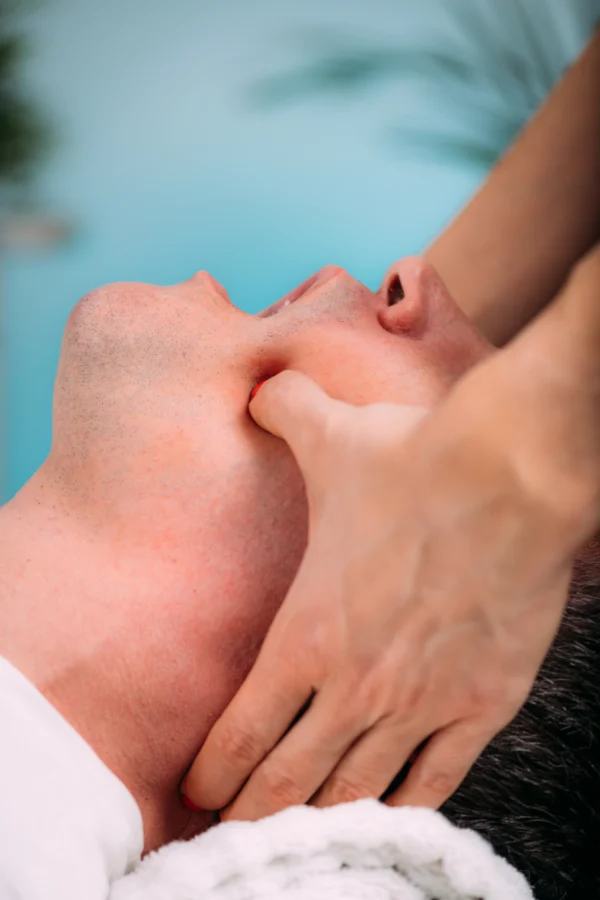
The temporomandibular joint — the TMJ — is where your jaw connects to your skull, just in front of each ear. It’s one of the most complex and frequently used joints in the body, involved in every bite, word, and yawn. When the muscles surrounding it become chronically tense or the joint mechanics become disrupted, the effects can extend well beyond the jaw itself.
What TMJ Dysfunction Actually Feels Like
The symptoms of TMJ dysfunction are often surprising in their range. Most people are aware of jaw pain and clicking — but the full picture can include:
- Jaw locking, popping, or clicking
- Teeth clenching and grinding (bruxism), often during sleep
- Chronic headaches and migraines
- Pain or pressure around the ears
- Ear ringing (tinnitus)
- Facial pain and tightness
- Neck and shoulder tension
- Sinus pressure
- Dizziness
- Frozen shoulder
The connection between jaw muscle tension and symptoms this far-reaching is explained by anatomy. The masseter, pterygoid, and surrounding muscles have direct relationships with the neck, cranial nerves, sinuses, and upper shoulder. When they’re chronically contracted, tension radiates outward through those connections.
How Massage Addresses It
TMJ-focused massage works on the muscles directly responsible for jaw function — from the outside and, in some cases, from the inside using intraoral buccal technique.
External work addresses the masseter (the large chewing muscle running along the side of the jaw), the temporalis (along the temple and side of the head), the pterygoids (along the jaw and inner cheek), and the surrounding neck and suboccipital musculature. These areas hold the pattern of tension that drives most TMJ symptoms.
Intraoral technique allows access to the interior surface of the masseter and the pterygoid muscles — areas that external pressure simply cannot reach. Working these muscles from the inside, with a gloved hand, can release layers of tension that have accumulated over years of clenching, grinding, or chronic stress.
The combination of both approaches in a single session produces results that neither technique delivers alone.
What to Expect
Our TMJ Relief service is available in 30 and 60-minute sessions. The 30-minute session provides focused work on the primary jaw and facial muscles — effective for maintenance or targeted relief. The 60-minute session allows time for more comprehensive work including the neck, suboccipitals, and shoulders, which are almost always involved when TMJ symptoms are significant.
Some tenderness in the treated muscles is normal following a session, similar to how other muscles feel after effective bodywork. Most clients notice a meaningful reduction in jaw tightness and associated symptoms within 24 to 48 hours.
Regular Treatment vs. One-Time Relief
A single session can provide noticeable relief — but TMJ dysfunction that has been present for months or years typically requires consistent treatment to produce lasting change. The muscles return to familiar patterns of contraction unless those patterns are systematically addressed over time.
Many clients find that monthly TMJ-focused sessions, combined with awareness of clenching habits during the day, produce sustained improvement where other approaches haven’t.
If you’re dealing with jaw pain, grinding, or any of the associated symptoms listed above, we’re glad to discuss what a treatment plan might look like for your situation.